
Contents
Overview
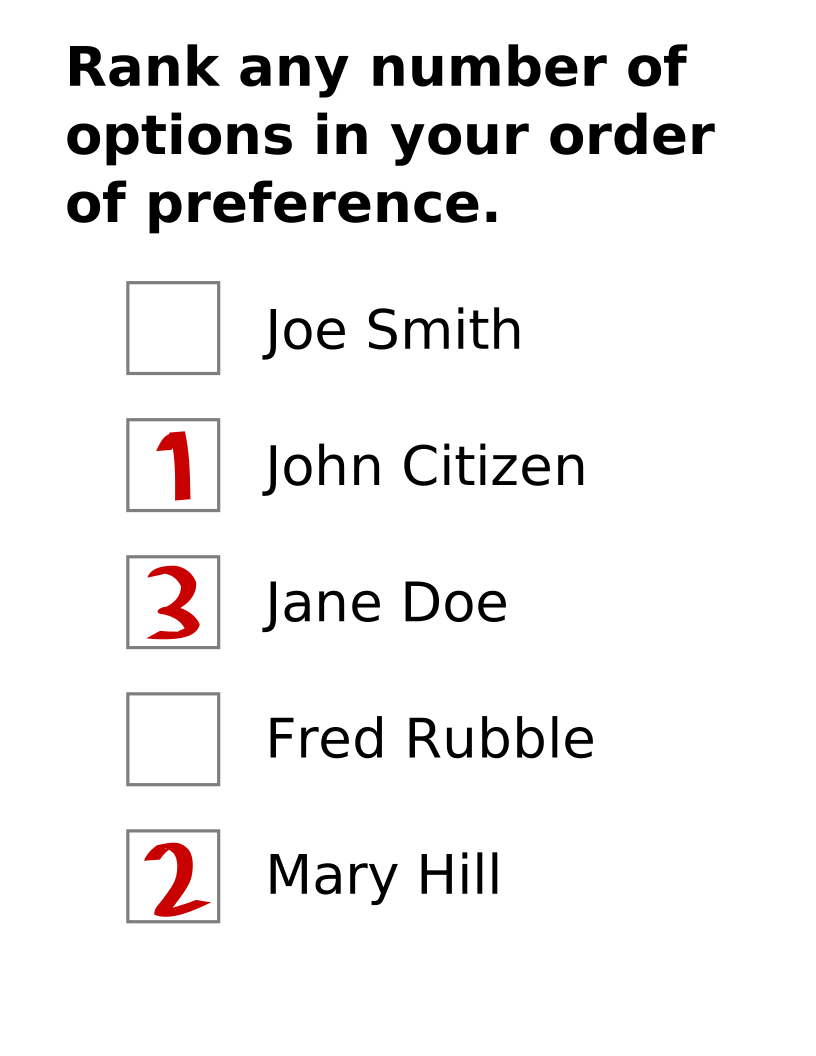
Building supportive voting communities is crucial for fostering a culture of inclusivity, empathy, and civic engagement. By promoting friendly and community-oriented voting practices, individuals and organizations can help create a more participatory and representative democracy. This approach involves educating voters about the voting process, encouraging active participation, and providing resources for underrepresented groups. With the help of voting systems like the single transferable vote (STV), communities can ensure that every vote counts and that the voices of all members are heard. For example, the use of STV has been shown to increase voter satisfaction, with voters in STV systems reportedly feeling that their vote counts.
🎵 Origins & History
Origins paragraph — The modern movement of building supportive voting communities gained momentum in the 1990s with the establishment of organizations like the National Voter Registration Day and the League of United Latin American Citizens. Today, building supportive voting communities is a key focus area for many civic engagement groups, including the NAACP and the American Civil Liberties Union.
⚙️ How It Works
How it works — Building supportive voting communities involves a multi-faceted approach that includes voter education, community outreach, and advocacy. Organizations provide resources and training for community leaders to help them build inclusive and engaged voting communities. This approach has been successful in cities like Minneapolis, Minnesota, where the use of STV has increased voter turnout and led to more diverse representation on the city council. However, implementing STV systems can be complex and requires significant resources and planning.
📊 Key Facts & Numbers
Key facts — The use of STV systems can be complex and difficult to implement. However, voters in STV systems are more likely to feel that their vote counts.
👥 Key People & Organizations
Key people — Key individuals and organizations are involved in building supportive voting communities, working to promote inclusive and engaged voting communities.
🌍 Cultural Impact & Influence
Cultural impact — Building supportive voting communities has had a significant cultural impact, with many artists and activists using their platforms to promote civic engagement and voting rights.
⚡ Current State & Latest Developments
Current state — As of 2024, building supportive voting communities remains a key focus area for many civic engagement groups and organizations. With the rise of social media and online platforms, it has become easier for communities to connect and mobilize around voting issues. However, challenges like voter suppression and disinformation continue to pose a threat to the integrity of the voting process. To address these challenges, organizations are working to provide accurate and unbiased information to voters.
🤔 Controversies & Debates
Controversies — One of the main controversies surrounding building supportive voting communities is the issue of voter suppression. Many critics argue that certain voting laws and practices disproportionately affect marginalized communities and undermine the democratic process. Others argue that the use of STV systems can be complex and difficult to implement, and that they may not be suitable for all communities.
🔮 Future Outlook & Predictions
Future outlook — Looking ahead, building supportive voting communities is likely to continue to be a key area of focus for civic engagement groups and organizations. With the rise of new technologies and online platforms, there are many opportunities for innovation and experimentation in the field of voting and civic engagement. However, it will also be important to address the ongoing challenges and controversies surrounding voting rights and voter suppression.
💡 Practical Applications
Practical applications — Building supportive voting communities has many practical applications, from increasing voter turnout and civic engagement to promoting more inclusive and representative democracy. By providing resources and training for community leaders, organizations can help build stronger, more resilient communities that are better equipped to address the challenges of the 21st century.
Key Facts
- Category
- voting-resources
- Type
- concept